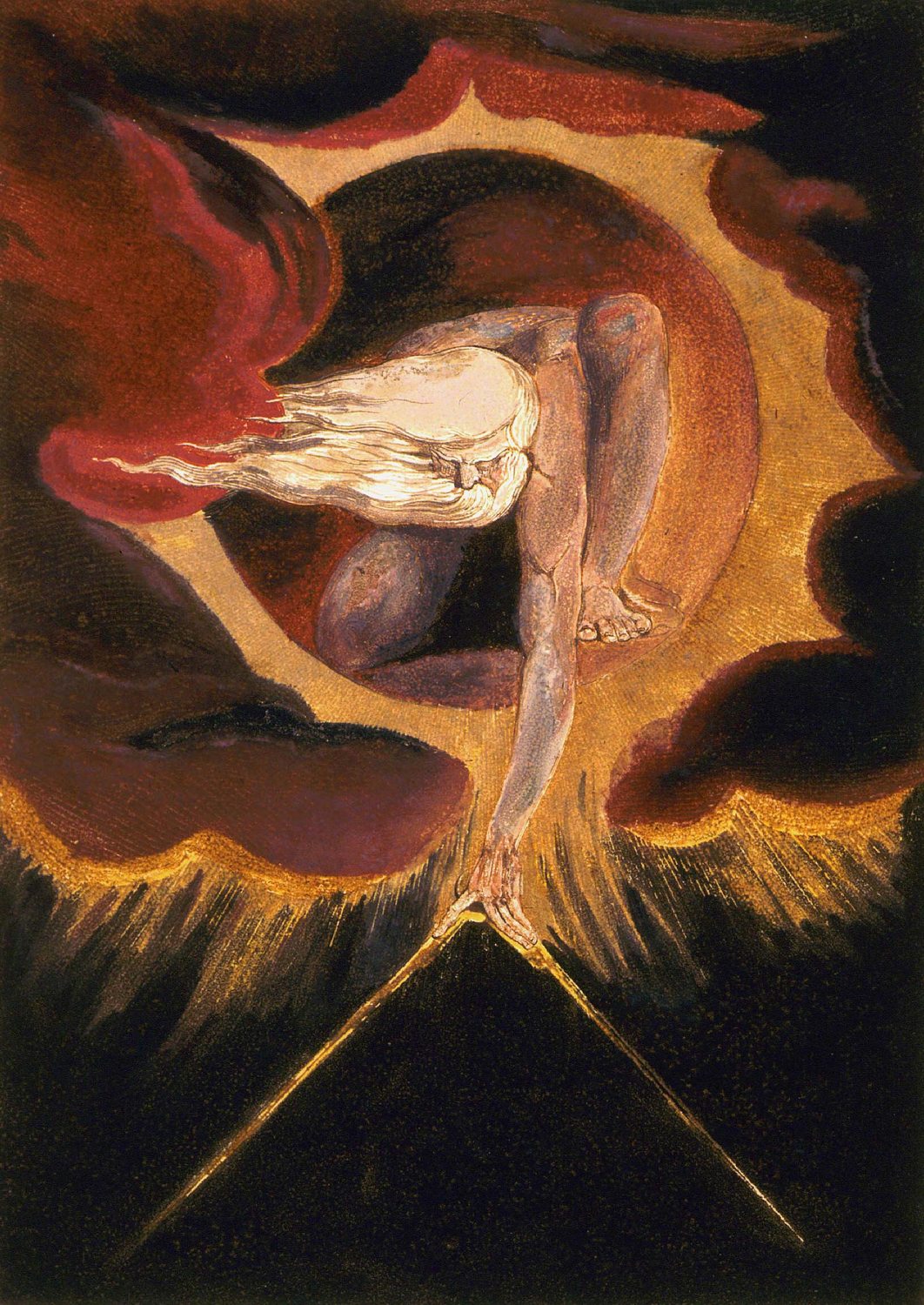
The Imagination Engine
What William Blake Knew About Creative Power That Your Innovation Program Doesn't
There is a particular quality of attention that precedes every genuine act of creation. Blake called it Vision. We have forgotten what it means. When organizations talk about innovation, they talk about processes, frameworks, sprints, and pipelines. And then they wonder why nothing truly original emerges.
The Two Modes of Mind
Blake drew a sharp distinction between what he called the "Corporeal Understanding" — the rational, analytical mind that categorizes, compares, and concludes — and the "Imaginative Faculty," which he saw as the seat of all genuine creative power.
For Blake, the Corporeal Understanding was not the enemy of creativity. It was simply the wrong tool for the job. You would not use a scalpel to paint a landscape. The problem arises when we mistake the scalpel for the only instrument available.
Most corporate innovation processes are designed entirely for the Corporeal Understanding. They ask people to generate ideas on demand, evaluate them immediately, and defend them rationally, all within the same meeting. This is the cognitive equivalent of asking someone to simultaneously compose music and conduct a cost-benefit analysis of each note.
The result is predictable: safe ideas. Incremental ideas. Ideas that already fit the existing mental models of the room.
What Blake Called Vision
Blake's concept of "Vision" was not mystical in the way we might assume. It was, in essence, a quality of perception: the capacity to see what is present but not yet visible, to sense the latent form within the formless.
He described it as a state in which the ordinary filters of habit, fear, and social expectation fall away, and something more immediate takes their place. Not chaos, but a different kind of order. Not irrationality, but a different kind of knowing.
Modern neuroscience has found its own language for this state. It corresponds to what researchers call the "default mode network": the brain's activity during unfocused, inward attention. This is the network responsible for insight, metaphor, and the unexpected connection. It is activated not by effort, but by its deliberate absence.
Blake knew this without the neuroscience. He built his entire creative life around the discipline of entering and sustaining this state.
The Conditions of Natural Intelligence
Here is what Blake's practice, and contemporary research, suggests about the conditions under which genuine creative intelligence emerges:
- Slowness. Not the slowness of inefficiency, but the slowness of depth. Ideas that matter need time to form below the surface before they can be articulated. The sprint culture kills them before they are born.
- Permission to not-know. The imaginative state requires a temporary suspension of the need to have answers. This is uncomfortable in organizational contexts, where uncertainty is associated with incompetence. But it is the necessary precondition for anything genuinely new.
- Psychological safety at the level of identity. Not just "it is safe to share bad ideas." Deeper: it is safe to not yet be sure who you are in relation to this problem. Creativity requires a momentary dissolution of the defended self.
- Solitude within community. Blake worked in intense isolation and in intense dialogue. The rhythm between the two was essential. Pure brainstorming groups miss the solitude. Pure individual work misses the friction of encounter. The most generative creative environments alternate deliberately between the two.
What This Means for Organizations
The implication is not that organizations should become poetry workshops. It is more precise and more practical than that.
It means that if you want your people to access genuine creative intelligence, the kind that produces ideas that could not have been predicted in advance, you need to design for the state, not just the output.
You need moments of structured not-knowing. You need containers where the pressure to perform is temporarily lifted. You need leadership that models intellectual vulnerability rather than polished certainty. You need time: not infinite time, but protected time, held apart from the relentless forward momentum of operations.
Blake spent his life insisting that Imagination was not a luxury or a talent reserved for artists. It was, he believed, the fundamental human capacity: the one from which all others drew their vitality.
He was right. And organizations that learn to cultivate it, rather than merely extract from it, will find themselves in possession of something their competitors cannot easily replicate: a system that generates genuinely original thought. Not because they hired more creative people. But because they built the conditions in which the creative intelligence already present in their people could finally breathe.